


What is a Business Review and why is it important?
When assessing or reviewing a business, the available data might be limited or outdated. There are key metrics you should look for to build an initial understanding for further investigation.
Qualitative & Quantitative
To start with, let's break this down into insights based on financial data (quantitative) and all other aspects (qualitative).
Qualitative Insights
Whether you are an existing owner or if you are reviewing a business for the first time, the key qualitative (or non-financial) metrics to assess include:
1/ Understand the Risks
There are countless definitions of risk types, but the first group to consider are exogenous risks that are inherent or beyond direct control. These include economic conditions, industry-specific trends, compliance-driven needs, and competitor strengths. Are these risks known?
The second group are risks that are specific to the business, such as reputation and operational decisions. Look at how these have been managed in the past.
To understand a business, a grasp of the risks and a review of how they are managed is required. When looking at an industry you are not familiar with, look for someone who has experience that can provide guidance.
2/ People Dependency
Can the business operate for a sustained period without involvement of key people - typically the owner? Is there a brand equity that can be sustained beyond the key operator and owners?
3/ Leverage
Can the business grow and not be at all solely reliant on the owners? Can it build systems for its growth? Are there culture frameworks, marketing and sales programs (such as CRM) and customer service processes that don't rely on individual expertise at an operational level? Are systems well documented to prevent undue reliance on any one person?
4/ Understand Market Positioning
Positioning is an aspect of branding that is defined as "shaping how individuals perceive the organisation or its service". Whether deliberately managed or not, the business will have an identity and be positioned in the mind of your target audience and stakeholders, relative to competitors. Is the market positioning aligned with your own fundamental objectives?
The positioning of the business should align with the needs and values of the target audience as a key means of differentiating its service offering from competitors.
5/ Scope for Growth
Identify what stage the business is at in its life cycle. Can it grow by offering the same services to its existing customers? Or does it need more customers? Does it need to expand its service offering to both new and existing customers?
6/ The End Game
What is the business worth? How should it be valued in today's market? A buyer will have a range of motivations and objectives when assessing the price they will be willing to pay.
Quantitative Insights
Getting a gauge of the numbers isn't a simple process and is never as quick as you want it to be. There are many parts to a business, but a solid review should take into account the underlying trends across profitability, cash flow and key funding measures. Let's look at these:
1/ Profitability
Look for current Profitability and trends over past financial periods. Identify the key aspects that provide the context for any material changes in profit (or loss).
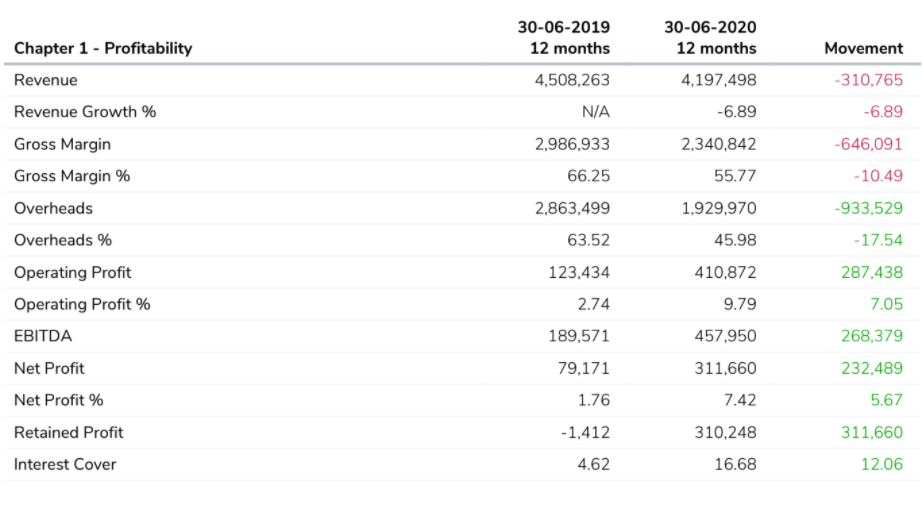
As an example, the numbers below show a business that is being offered for sale.
Key trends here are the very material movement in Revenue, Gross Margin & Expense. When questioned about what has caused this change, it was revealed that some higher-margin customers had not renewed contracts. Employee numbers were reduced as a result. Therefore, the business may not be sustainable at the current cost base.
2/ Cash Flow
"Cash is King". A further review of this business showed a very different cash flow position compared with its reported profit. A backlog of overdue payments was owing to suppliers, resulting in a negative cash position, which added more risk to the proposed sale. 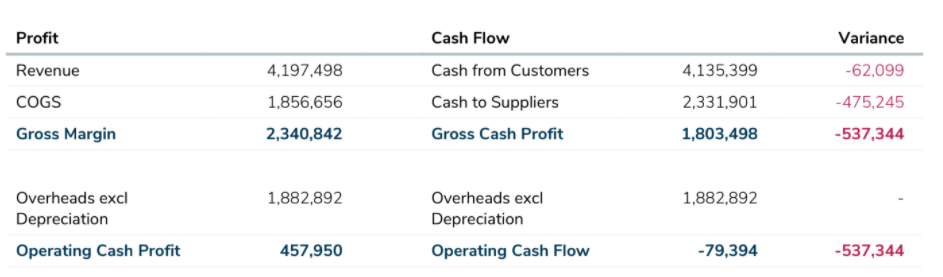
3/ Working Capital Management
Also known as WCM, we define working capital management as the capital of a business used in its day-to-day operations, calculated as Current Assets less Current Liabilities. 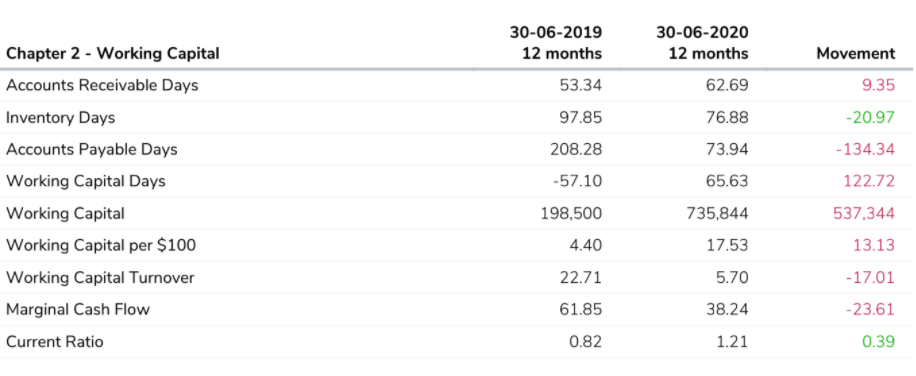
The Business Review of the above Working Capital report noted:
- Accounts Receivable Days had adversely increased by 9 days.
- Inventory Days had improved by 12 days. (Due to the business quitting inventory at a lower gross margin)
- Accounts Payable improved significantly (after the required remediation as identified above).
4/ Funding
It is important to draw a greater understanding of the composition of debt v equity v cash funding of the business operation, and explore the context for movements.
This is where it is critical for business owners to understand the difference between Debt and Equity. Business owners often have responsibility for a variety of operational and strategic roles in a business and may make decisions depending on the different capacity required at the time. However, Debt and Equity decisions should be approached based on the growth objectives of the business.
5/ Business Value
All existing and prospective business owners are always interested in business value, net of debt funding arrangements. There are two common ways to value a business to determine what a business is worth. One of these is EBIT or EBITDA - earnings before interest, tax, depreciation and amortisation (debt). 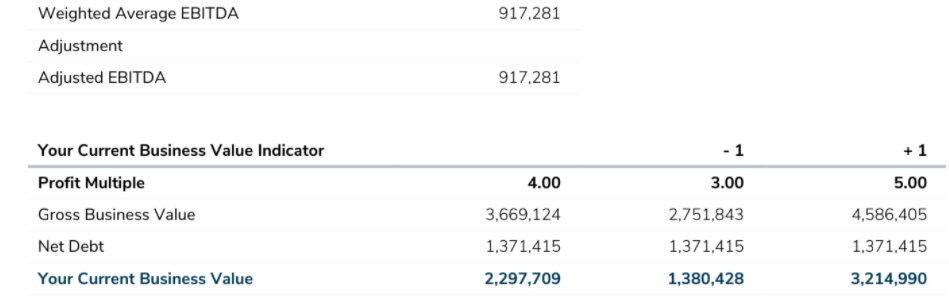
6/ Understand your Industry
Lastly, the numbers may not mean much without benchmarks, which can be found by studying the industry in which the business operates. Quantitative intel includes Average Profit and Gross margins, and expected financial prospects for the future.
More Insights can be found in our guide to Buying a Business in Australia.

Contact MCP
1300 510 816 or your Finance Partner
enquiry@mcpfinancial.com.au