


There are over 2.65 Million Small Businesses in Australia, according to 2025 ABS data. These businesses play an essential role in the economy by providing jobs, delivering services, and driving innovation and productivity.
Yet, managing a business effectively is a significant undertaking. Many business owners struggle to reward their contribution to the business with a consistent market-level salary due to other financial commitments such as employee wages, inventory costs, business loans and other debt repayments and fluctuating cash flow.
Business Owners - "Not Paying Themselves First"
Making regular superannuation contributions can be a low priority, especially as the self-employed are excluded from the mandatory contribution scheme.
The more pressing priority is usually to invest in the business, with the bigger goal of the business providing a form of financial security ultimately through its sale or succession.
Many groups have previously called for changes to the superannuation system by introducing a payment obligation for the self-employed, perhaps at a lower contribution rate initially. As an example, Mercer Super points to Finland, where self-employed workers provide an annual salary estimate, upon which superannuation contribution calculations are made.

Financial Management for Business Owners
Superannuation can be both a tax-effective and long-term planning tool as part of good financial management.
Over time, super investments create an alternate asset for the owner where its performance is not tied to the performance of the core business. Taking insurance within the super fund is another option to consider. These strategies can bring peace of mind along the journey.
Strategies to make owner superannuation a habit:
- Consider treating yourself as a PAYG employee (even part-time), therefore invoking a mindset of mandatory super on top of your salary
- Look at what an average weekly salary would be for your 'profession', calculate 12% of that, and set up a weekly direct debit to your super fund - automation creates a sustainable habit that you can still control by skipping some weeks if you need to
- If 12% is not realistic, then start at 5% or 6% and increase by 1% a month - it's surprising how quickly this will become normal, especially as your fund balance grows
- Use your super contributions cap as an effective tax strategy and tip in extra amounts as a 'bonus' when cashflow allows
- Establish a goal of total contributions over a medium-term horizon so you know what you are working towards and can project future gains 10-20 years forward to keep you motivated
- Choose a platform with no or low administrative commitments such as the Small Business Superannuation Clearing House (SBSCH)
- Understand your "Opportunity Cost" and find a balance between 'Your Super Return' and 'Investing in the Business'
How about Self Managed Super Funds (SMSF)?
Having an SMSF provides more choice and flexibility (including having up to four members) and the ability to access investment options that would otherwise be unavailable such as commercial property.
On the flip side, managing an SMSF is a significant commitment. As the trustee, you need to ensure your fund complies with all relevant laws. There are ongoing costs and obligations can be time consuming. However, when structured well, the benefits can outweigh the obligations.
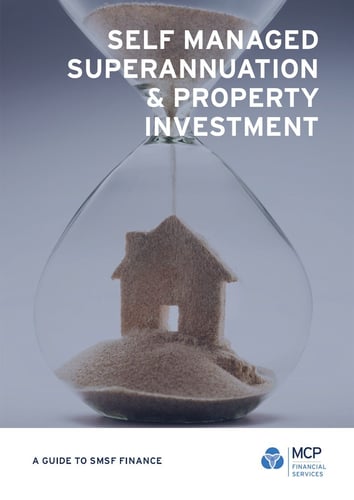
Learn more in our SMSF and Property Guide.
Contact MCP
1300 510 816 or your Finance Partner
enquiry@mcpfinancial.com.au
Follow us on LinkedIn
The team at MCP Financial Services has specialised expertise in structuring complex debt arrangements. We can assist with review and restructuring, refinancing and renegotiating.